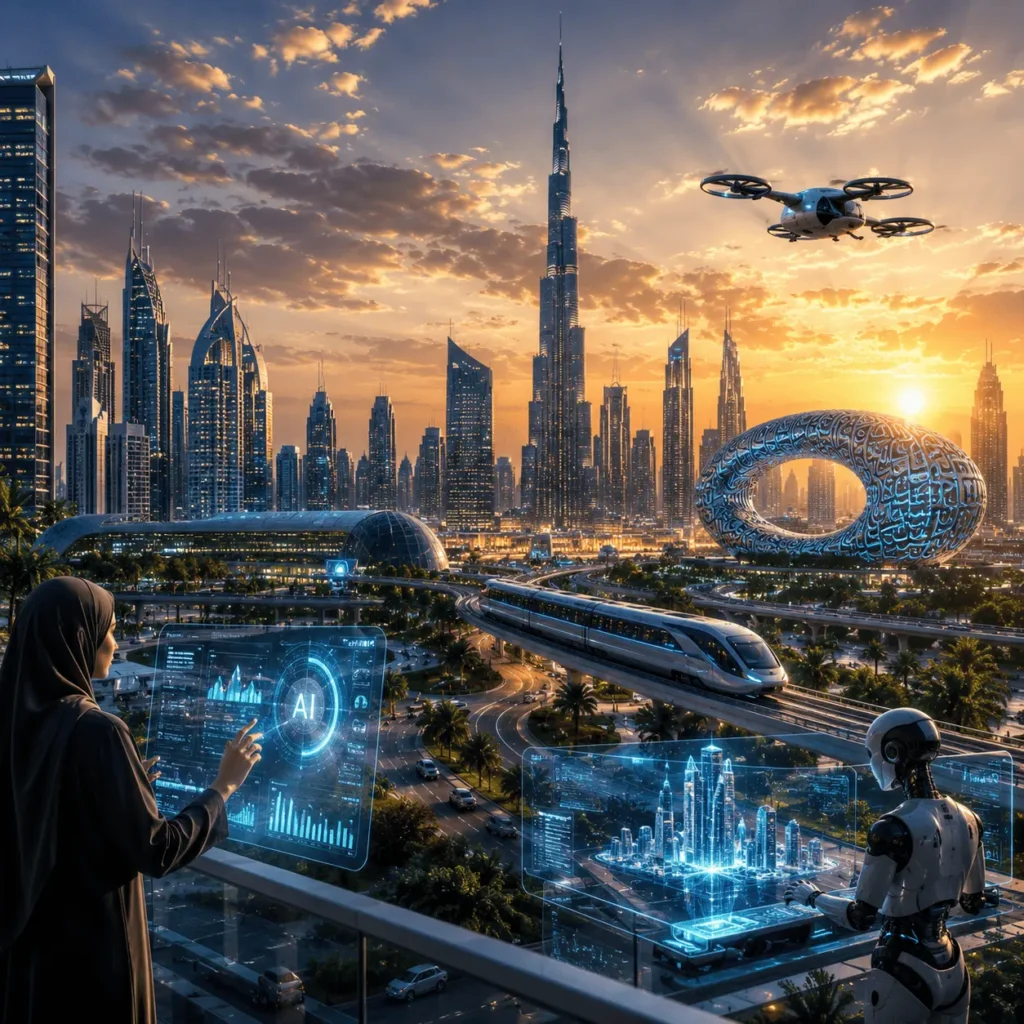
Dubai’s future is taking shape through decisions being made today. International trade, financial services, tourism and logistics remain important to the city’s economy, while new investment in artificial intelligence, digital technology and infrastructure is opening different possibilities for the years ahead.
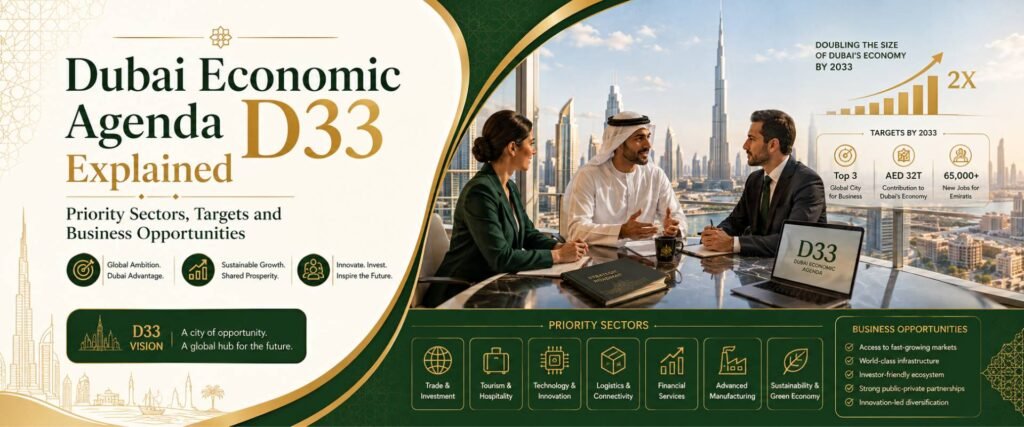
The Dubai Economic Agenda D33 outlines the emirate’s economic ambitions for 2033, while the Dubai 2040 Urban Master Plan focuses on how its communities, transport networks and public spaces will develop. Together, these strategies show how Dubai’s vision extends beyond business growth to the way people live and work.
At Vision Dubai, we connect today’s developments with tomorrow’s plans. We follow economic policies, investment trends, emerging technologies and industry changes to help our readers understand where Dubai stands, what is being planned and what it could mean for the wider UAE.
Independent editorial platform focused on UAE business, innovation, investment, and future industries.
Dubai’s role in international business is supported by infrastructure that connects companies with markets around the world. Jebel Ali Port handles international cargo, Dubai International Airport supports passenger and commercial connectivity, and the Dubai International Financial Centre provides a base for financial institutions and professional services. These established strengths remain important to Dubai economic growth. At the same time, businesses face changing customer expectations, advances in technology and new demands for skilled workers.
The UAE’s economic development also extends beyond Dubai. Abu Dhabi contributes through energy, finance and industrial investment. Sharjah has established manufacturing and education sectors, while Ras Al Khaimah and other Northern Emirates support tourism, logistics and specialised industries. We look at how these activities connect with wider national priorities. A new transport route can influence business locations. Digital licensing can change how companies deal with government departments. Investment in education can help industries find the skills they need.
Understanding these connections is central to our coverage of Dubai’s present economy and its future direction.
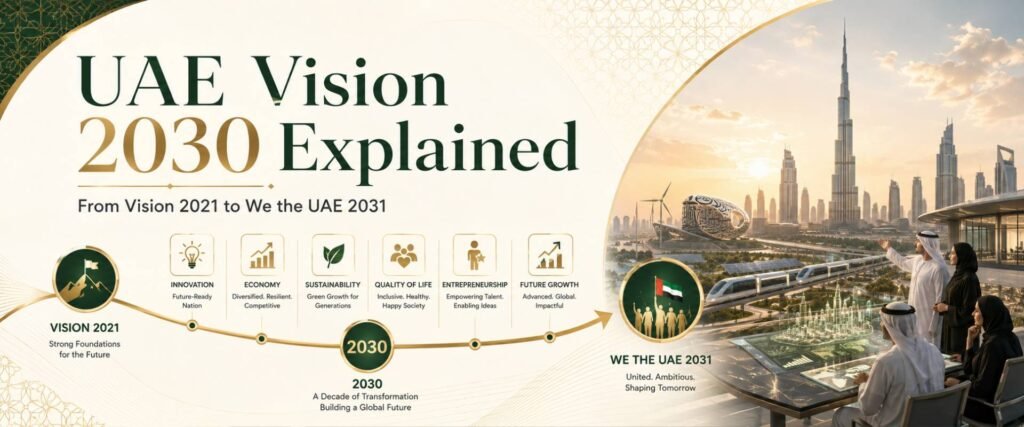
Dubai’s long-term ambitions are set out in several official strategies. Each addresses a different challenge, from attracting international investment to preparing infrastructure for population growth. We examine these plans alongside developments that are already taking place, keeping future targets separate from completed achievements.
The future industries in Dubai are developing alongside businesses that already contribute to the emirate’s economy. Finance, logistics, tourism and manufacturing are not being replaced by technology. Many are finding new ways to use it.
Financial services provide one example. Dubai International Financial Centre reported 10,018 active registered companies at the end of the first half of 2026, including 1,933 companies working in AI, fintech and innovation. This reflects the growing presence of technology businesses within Dubai’s established financial environment. Tourism provides another measure of current economic activity. According to Dubai’s Department of Economy and Tourism, the emirate welcomed 19.59 million international overnight visitors in 2025, up 5% from 2024. Visitor activity supports a wider network of hotels, restaurants, attractions, events and transport services.
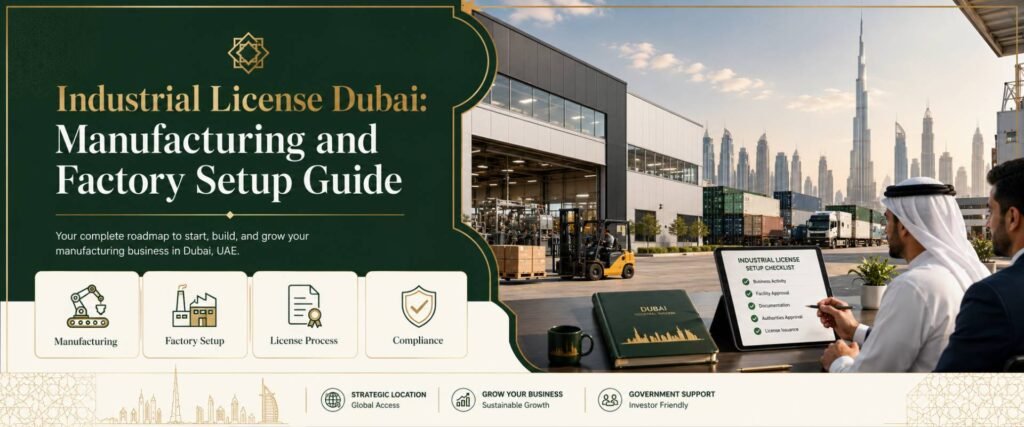
In logistics and manufacturing, businesses are exploring automation, digital tracking and more efficient operations. Healthcare providers are also adopting connected information systems, while education institutions are responding to changing employment needs. We examine what these developments mean for industries rather than treating every new technology or investment announcement as guaranteed economic success.
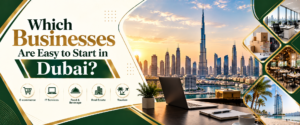
Dubai’s business environment connects global trade, financial services, free zones and modern infrastructure. These strengths support international businesses, while evolving regulations, technologies and market conditions create new opportunities and challenges. At Vision Dubai, we explore five key areas shaping the emirate’s economic development.
Dubai innovation is advancing through artificial intelligence, automation and digital services. We examine how businesses and government departments adopt these technologies, along with challenges such as cybersecurity, costs and workforce skills.
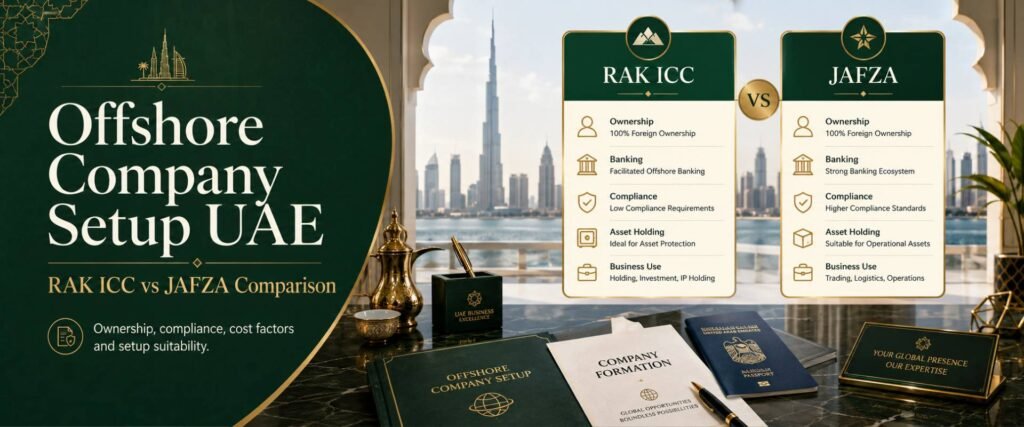
Investment in Dubai spans company formation, infrastructure, real estate and emerging industries. We explore mainland and free zone opportunities while considering licensing requirements, market demand and operating costs.
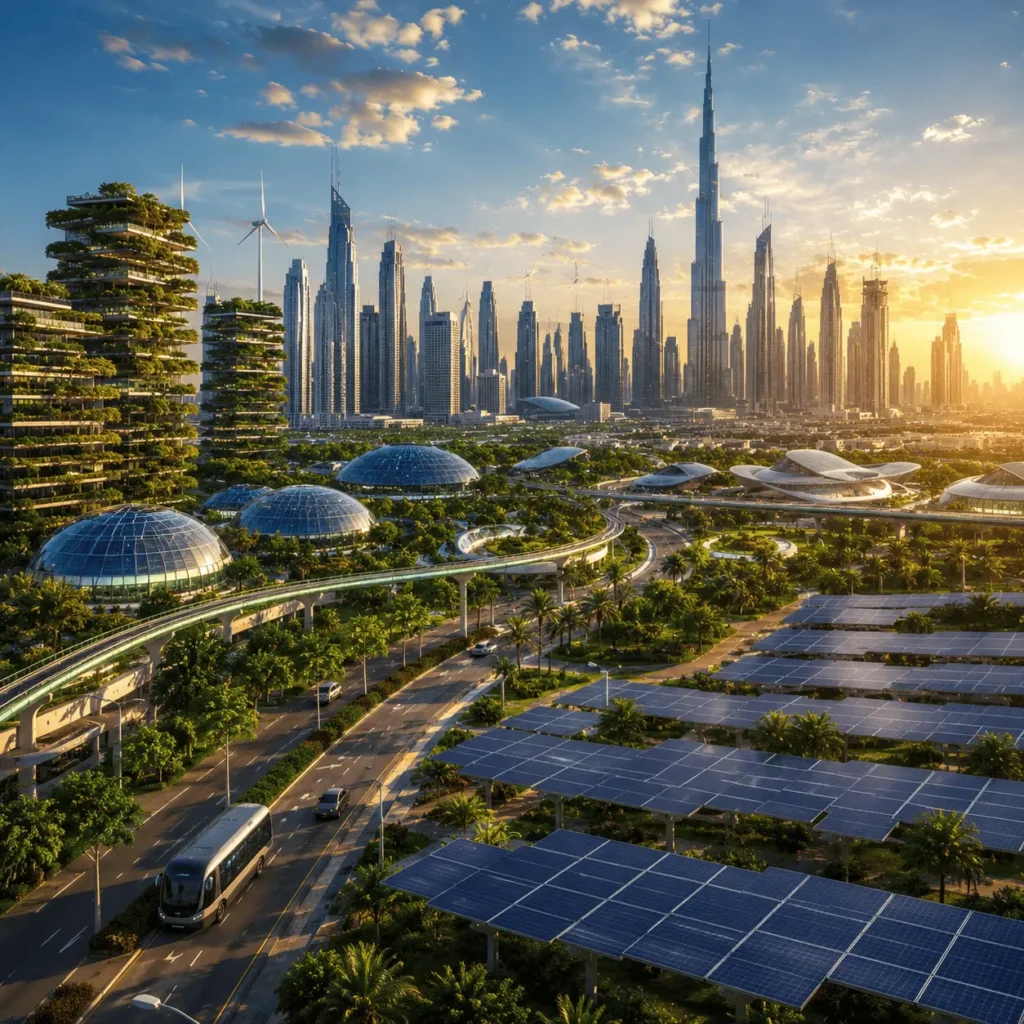
Dubai's transport networks, utilities and urban projects support economic activity. Sustainable development in Dubai also includes clean-energy investments such as the Mohammed bin Rashid Al Maktoum Solar Park, which DEWA reported had reached 3,860 MW of capacity, with plans to exceed 8,000 MW by 2030.
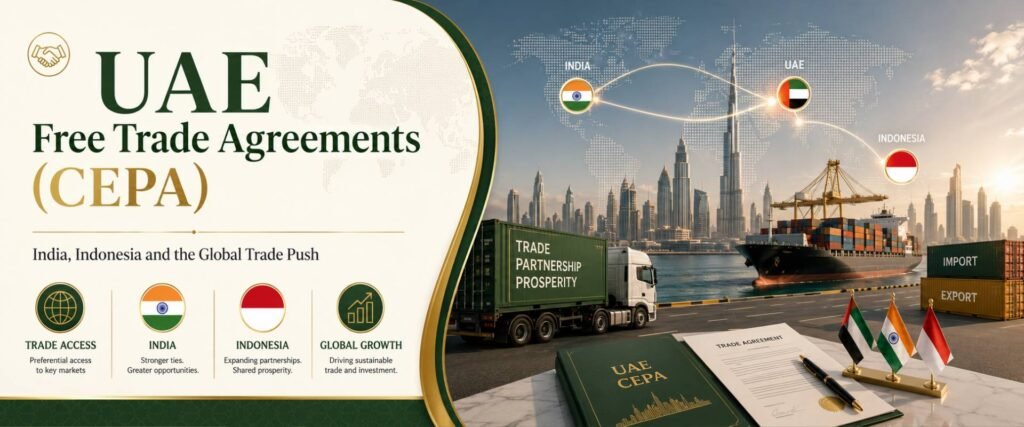
Dubai's ports, airports and international trade networks connect businesses with global markets. We examine how trade agreements, logistics infrastructure and customs regulations influence cross-border business opportunities.
Dubai's evolving industries need skilled professionals in technology, healthcare, manufacturing and logistics. We explore how education, specialist training and workforce development contribute to the UAE's future economic growth.
UAE business opportunities differ according to the industry, business model and market a company intends to serve. For example, a company selling services within Dubai may have different licensing and operating requirements from an international trader or manufacturer. Choosing between a mainland company and a free zone structure involves questions about business activities, premises, regulatory approvals, taxation and customer access.
At Vision Dubai, our business and investment resources help readers understand these practical differences. We cover company formation, entrepreneurship, business regulations, licensing and developments affecting the UAE’s investment environment. We also examine how the Dubai Economic Agenda D33, international trade and technology adoption connect with business activity.
Our goal is to provide useful information for entrepreneurs, investors and professionals researching the Emirates, without presenting every opportunity as suitable for every business.
Explore Business & Investment Resources
Healthcare is an important part of Dubai’s development, particularly as medical services adapt to changing population needs and advances in technology. The Dubai Health Authority’s NABIDH platform is one example of digital healthcare infrastructure. It supports the secure exchange of electronic medical records between connected healthcare providers, helping clinicians access relevant information when treating patients.
Developments like this raise practical questions about access to care, information security, insurance coverage and the responsibilities of healthcare providers. Through our healthcare resources, we explore the UAE’s medical services, healthcare regulations, preventive care and technology developments.
We focus on helping readers understand how the healthcare system works and where official guidance is needed when making important decisions.
Explore Healthcare & Wellness Resources
Dubai’s changing economy is creating new questions about education and employment. As businesses introduce artificial intelligence, automation and specialised technologies, the skills needed in many workplaces are evolving. Schools, universities and training institutions have an important role in preparing students and professionals for these changes.
Dubai’s Education Strategy 2033 sets out plans to improve learning outcomes, widen educational opportunities and better connect education with the emirate’s future needs.
At Vision Dubai, we cover education in Dubai through subjects that matter to families, students and employers. Our resources explore schools, higher education, professional qualifications, digital learning and workforce development. We also look at how education and future skills in the UAE relate to technology, healthcare, finance and other developing industries.
Explore Education & Skills Resources
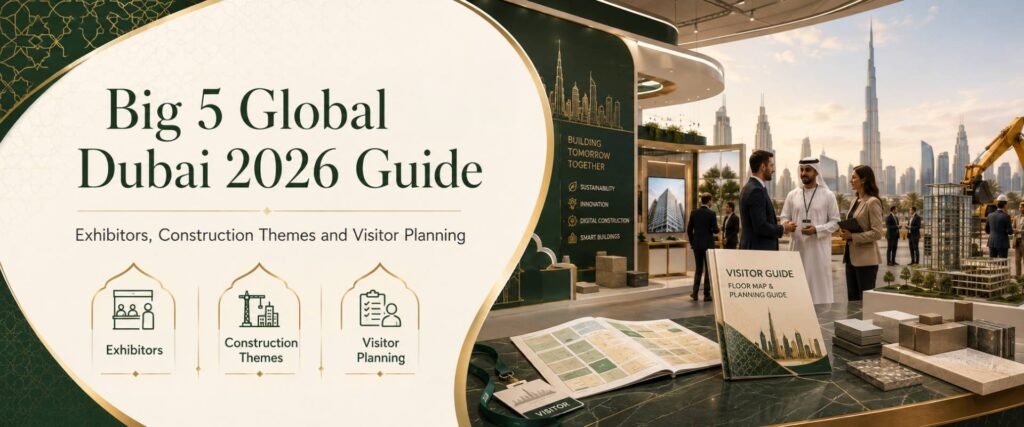
Dubai exhibitions and international conferences connect businesses with global markets, suppliers and emerging industry trends. Events such as GITEX Global, Gulfood and the Dubai Airshow highlight developments in technology, food trade and aviation, while other UAE trade shows cover healthcare, construction, energy and manufacturing.
At Vision Dubai, we share industry insights, event updates and practical guidance for exhibitors and visitors. We also explore how effective exhibition planning, stand design and brand presentation help businesses connect with potential customers. These events give companies opportunities to showcase their services, build industry relationships and explore new markets. We help readers understand exhibition trends, participation requirements and the factors that contribute to a successful trade show experience.
Companies exhibiting in the UAE and international markets can explore StandsBay, exhibition stand builders worldwide, for stand design, fabrication, installation and project support.
Explore Events & Industry Insights
Dubai’s future economy will be influenced by both digital technology and the physical systems that support businesses and communities. The Dubai digital economy is an important part of this transformation, but transport, energy, tourism, healthcare and property development will also shape what happens next. We follow the industries and future projects in Dubai that may influence business activity over the coming years.
AI is becoming more relevant to financial services, government operations and business administration. We examine how organisations adopt these systems, the benefits they report and the challenges involved in using them responsibly.
Projects such as the Dubai Metro Blue Line show how future transport connections can influence residential and commercial development. We follow urban planning decisions and their possible effects on accessibility and business locations.
International trade remains central to Dubai’s economy. Digital logistics, customs systems and transport infrastructure may help businesses improve operations and maintain connections with global markets.
Dubai’s visitor economy supports hotels, restaurants, events and attractions. We examine changing travel patterns, hospitality investment and the factors affecting long-term demand.
Connected medical systems, specialised treatment and healthcare technology are influencing how services develop. Professional standards, patient safety and accessibility remain important considerations.
Dubai’s sustainable development plans include expanding clean-energy capacity and improving resource efficiency. We examine completed projects, ongoing investment and the progress of long-term environmental goals.